174th Battle Group Handbook

This handbook is intended to provide a comprehensive overview of the 174th Battle Group, its structure, operations, and guidelines for members. It serves as a reference for both new recruits and seasoned members to ensure consistency and efficiency within the group.

Using This Handbook

This handbook is organized into sections that cover various aspects of the 174th Battle Group. Each section is designed to provide clear and concise information on specific topics.

Members are encouraged to familiarize themselves with the contents of this handbook and refer to it regularly to ensure they are adhering to the standards and expectations of the 174th Battle Group.

Departments

The 174th Battle Group is organized into several departments, each responsible for specific functions and operations. These departments include:

Ranks

Red Right Hand uses a rank system to denote hierarchy and roles within its divisions. Below is a breakdown of the ranks for each division:

Description Naval Marine
Rank 0 Entry-level Cadet Private
Rank 1 Proven experience Ensign Corporal
Rank 2 Specialised role Lieutenant Sergeant
Rank 3 Tactical leadership Captain Major
Rank 4 Leads leadership Commodore Commander
Rank 5 Strategic command Admiral General

Each rank comes with its own set of responsibilities and expectations, contributing to the overall effectiveness and discipline of the Red Right Hand.

Marine Ranks

Private

The entry-level rank for new recruits in the Marine division. Privates undergo basic training to prepare for their roles and must demonstrate commitment and discipline through their training period before advancing to Corporal. They are usually assigned to fundamental duties and learning tasks within the Marine Corps.

Corporal

Corporals are Marines who have proven their abilities in the field and demonstrated leadership potential. They often serve as team leaders for small units and are responsible for the training and welfare of Privates. Corporals are expected to lead by example and maintain high standards of discipline and performance.

Sergeant

Sergeants are non-commissioned officers with specialized skills in areas such as infantry tactics, logistics, reconnaissance, or heavy weapons. They serve as squad leaders or technical experts and are responsible for mission planning at the unit level. Sergeants bridge the gap between enlisted personnel and commissioned officers.

Major

Majors hold tactical leadership positions and typically command platoons or companies. They are responsible for coordinating multiple squads in combat operations and ensuring that their units are properly trained and equipped. Majors must demonstrate strong tactical acumen and the ability to make critical decisions under pressure.

Commander

Commanders lead groups of Majors and coordinate battalion-level or larger operations. They are responsible for operational planning, resource allocation, and ensuring that tactical leaders can execute their missions effectively. Commanders serve as the link between tactical and strategic leadership.

General

Generals hold the highest rank in the Marine division and are responsible for strategic command and overall Marine Corps operations. They establish doctrine, set long-term objectives, and represent the Marine forces in organizational leadership. Generals shape the identity and capabilities of the entire Marine division.

Fleet Composition

Design Principles

The fleet composition must adhere to the following design principles:

Standard Issue Ships

Though we may have access to a variety of ships, the following are the standard issue ships that we will maintain in our fleet:

Space Superiority Fighter

A fast and agile fighter designed for space combat, capable of engaging enemy ships and screening for larger vessels.

  • Primary Ship: Scorpius
  • Vanduul Variant: Glaive (replica) — For missions where we need to blend in with Vanduul forces or operate in Vanduul-controlled space.

Anti-Capital Fighter

A heavily armed fighter designed to take on larger capital ships, equipped with powerful weapons such as torpedoes able to penetrate heavy armor.

Ground Bomber

A ship designed to deliver powerful ordnance against ground targets.

  • Primary Ship: A1 Spirit
  • Scorched-Earth Variant: A2 Hercules Starlifter — For missions where we need to deny the enemy access to resources or territory, capable of delivering powerful area-of-effect weapons to destroy infrastructure and resources.

Dropship

A ship designed to transport troops and equipment to and from the battlefield whilst providing close air support and protection, capable of deploying forces directly into combat zones without the need for an escort or support.

Boarding Ship

A ship designed to transport boarding parties and equipment for boarding operations, able to quickly and efficiently deploy forces onto enemy vessels or structures.

Ship of the Line

A heavily armed and armored capital ship designed to serve as the backbone of our fleet, capable of engaging enemy capital ships and providing support for smaller vessels.

Command Ship

A ship designed to serve as the command center for our fleet, equipped with advanced communication and sensor systems to coordinate fleet operations and provide situational awareness as well as dedicated medical facilities to support our personnel during extended missions.

  • Primary Ship: Idris-K
  • Patrol Variant: Polaris — A lighter and more agile variant designed for reconnaissance and patrol missions, capable of operating independently or as part of a larger fleet.

Carrier

A ship designed to serve as a mobile staging point for our fleet, capable of launching and recovering smaller vessels and providing support for extended missions.

Interdictor

A ship designed to disrupt enemy communications and sensor systems, capable of jamming or hacking enemy vessels to gain an advantage in combat or reconnaissance.

Ambulance

A ship designed to provide medical support and evacuation for our personnel, equipped with advanced medical facilities and capable of transporting injured personnel to safety.

  • Primary Ship: Terrapin Medic
  • Rescue Variant: Cutlass Red — For search and rescue operations, capable of quickly reaching and extracting personnel from dangerous situations.
  • Field Hospital Variant: Apollo Medivac — For advanced medical care during extended missions, equipped with state-of-the-art medical facilities and staffed by highly trained medical personnel.

Minelayer

A ship designed to deploy mines and other area-denial weapons, capable of creating defensive perimeters or disrupting enemy movements.

Snub Fighter

A small and agile fighter designed for hit-and-run tactics, capable of quickly engaging and disengaging from enemy forces.

  • Primary Ship: Fury
  • Snub Bomber Variant: Fury MX — Designed to deliver overwhelming missile firepower against enemy targets, capable of quickly engaging and disengaging from combat while delivering devastating strikes.

Anti-Swarm Ship

A ship designed to engage and destroy smaller aerospace threats such as enemy fighters and ordnance, equipped with multiple rapid-fire weapons and advanced targeting systems to effectively counter many targets in parallel as well as providing overwhelming suppression against ground targets.
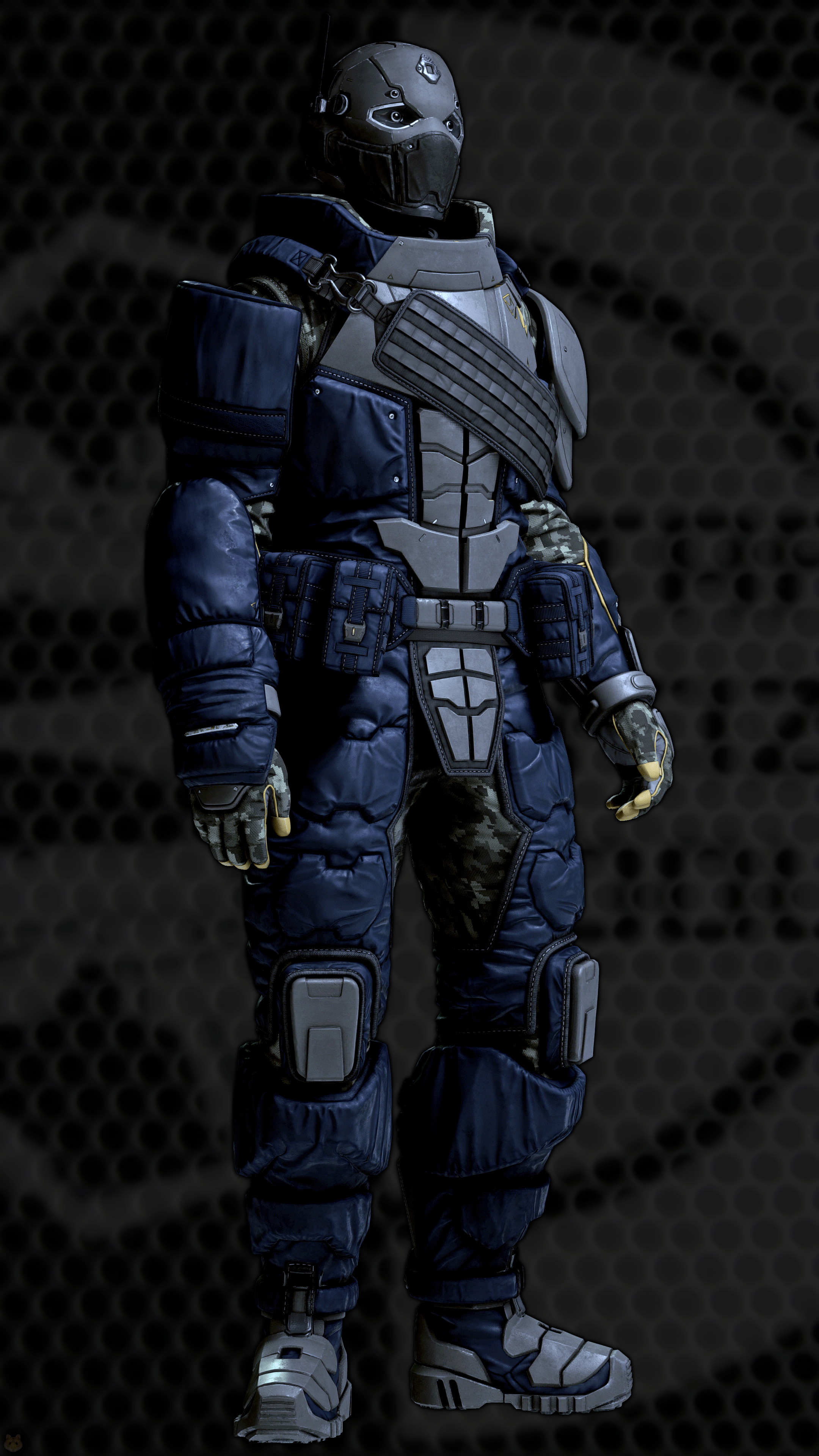
Gear Loadouts

The following loadouts are the standard issue equipment for members of the 174th Battle Group, organized by division.

Marine Loadouts

Heavy Loadout

Morozov-SH Suit

Scout Loadout

Arden-SL Armor

Tactical Loadout

DustUp Tactical Armor